Bridge Financing and How It Affects Job Attribution
Projects rarely wait for immigrant capital. They borrow, build, and repay the loan when subscriptions close. Whether the jobs created by the borrowed money can be credited to the investors who replaced it turns on what the financing was for when it was taken out.
The rule in short
Bridge financing is interim capital, usually a short-term loan or sponsor equity, used to begin a project before investor subscriptions are complete and later repaid from those subscriptions. Agency policy permits jobs created by bridge-financed activity to be credited to the immigrant investors whose capital replaces the bridge, provided the financing was temporary in nature and contemplated as such. Permanent financing refinanced after the fact stands on much weaker ground.
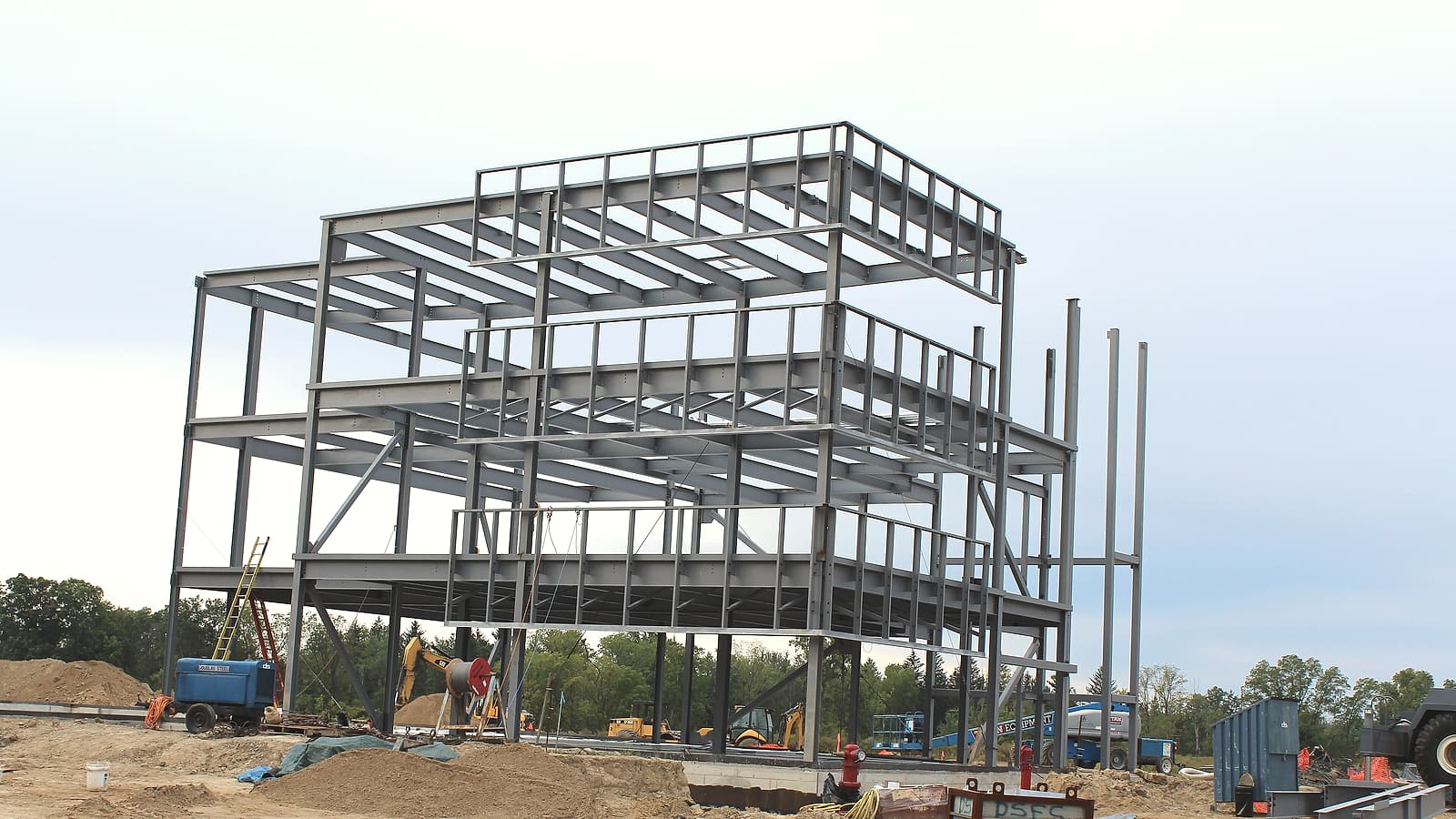
Construction does not wait for a visa queue. A developer with permits in hand borrows, breaks ground, and repays the loan when immigrant subscriptions close months or years later. By the time the investors' money arrives, the concrete is poured and the workers have been paid by someone else. Whether those investors may claim the jobs that spending created is the bridge financing question.
What bridge financing is
Bridge financing is interim capital used to start or continue a project before the permanent source of funds is in place. It takes several forms: a short-term bank facility, a mezzanine loan, a developer's own equity advanced with the expectation of being repaid, or an affiliate advance recorded as a loan. What unites them is that nobody intended them to be the project's long-term funding.
The immigrant capital is the take-out. Subscriptions close, the enterprise lends or contributes the pooled money to the project entity, and the interim facility is retired. Nothing about the physical project changes at that moment. The only change is on the balance sheet, and the whole argument is that the change on the balance sheet carries the earlier economic activity with it.
The condition that makes the jobs creditable
Agency policy accepts the substitution argument, with a condition. Jobs created by activity funded through bridge financing may be credited to the immigrant investors whose capital replaces that financing, where the financing was temporary in nature. The word doing the work is temporary. Financing that was always meant to be short-lived and replaced fits; financing that was the intended permanent capital structure does not.
Policy has also accepted that a project which planned a different take-out and then turned to immigrant capital may still qualify, provided the earlier financing was genuinely short-term rather than a permanent facility recharacterized after the event. That is a narrower allowance than it sounds. It rewards projects that document their financing plan contemporaneously and punishes those that reconstruct an intention years later.
The recurring failure is not that the financing was permanent. It is that nothing in the file says the financing was temporary. A loan agreement with a long maturity and no refinancing covenant, board minutes silent on the take-out, and an offering document that first mentions the bridge after it has been repaid together produce an evidentiary record that cannot support the credit, even where everyone involved always understood the loan to be interim.
Tracing the capital through the structure
The credit depends on the money actually replacing the money. In a typical structure the investor subscribes to a new commercial enterprise, the enterprise lends the pooled capital to a job-creating entity, and the job-creating entity retires the bridge. Every step needs documents: subscription and closing records, the loan agreement between the two entities, wire confirmations, and the payoff letter or discharge from the bridge lender.
Two entries in that chain cause most of the difficulty. The first is money that leaves the enterprise for something other than the project, since capital diverted to fees or reserves is not replacing anything. The second is a payoff that happens in stages, so that only part of the bridge is retired with investor funds. Partial replacement supports partial credit, and the economic report has to say so rather than claiming the whole.
How the economic model treats replacement
The job figures themselves come from an input-output model that converts expenditure or revenue into direct, indirect and induced employment. The model does not know where the money came from; it knows how much was spent and on what. That is why the substitution argument matters so much: it is the legal bridge between spending that already happened and investors who arrived afterward.
The inputs therefore have to be the bridge-financed expenditure itself, not a hypothetical budget, and the report has to identify which expenditures are attributed to which tranche of investors. How those models work, what inputs they accept and how a methodology is attacked is set out in the economic methodology behind an indirect job count. Where the spending is construction spending, the separate rules on duration and on when construction employment may be counted apply, and those are covered in counting jobs on a project that uses construction labor.
| Financing sequence | Jobs creditable to the investors | What the record must show | Common point of failure |
|---|---|---|---|
| Investor capital funds the work directly | Yes | Expenditure of the pooled capital on the project | Capital diverted to fees or reserves |
| Short-term loan later retired by investor capital | Yes, on the substitution theory | Temporary character of the loan and the payoff from investor funds | No contemporaneous evidence the loan was interim |
| Sponsor equity advanced and later returned | Yes, if genuinely interim | Board records treating the advance as a bridge | Advance indistinguishable from permanent equity |
| Permanent facility refinanced with investor capital | Ordinarily no | Nothing available; the premise fails | Recharacterizing the facility after the event |
| Bridge retired from operating revenue | No | Nothing available; no substitution occurred | Strong early trading quietly retires the loan |
What replacement does not fix
Bridge financing answers a question about job attribution. It does not answer any of the other requirements. The capital must still be exposed to loss once it reaches the enterprise, on the terms set out in the at-risk requirement and what breaks it, and using investor money to repay a loan does not convert the loan into a safe return for the investor.
Nor does it shorten the period the money must stay committed. Once the bridge is retired the capital is deployed, and the investor's obligation runs from that point; where the project finishes early and the money comes back to the enterprise, the constraints on moving it into a second project are the ones described in redeployment after the jobs are created. Projects whose financing history is complicated, or where the take-out happened in tranches, are worth putting in front of a bridge financing immigration lawyer while the documents can still be assembled cleanly rather than after a request for evidence has framed the question.
Points to carry away
- Bridge financing is interim capital advanced before investor subscriptions are complete.
- Jobs created by bridge-financed activity may be credited to investors whose capital replaces it.
- The financing must have been temporary in nature rather than a permanent facility refinanced later.
- The record must trace the capital from the enterprise into the project that created the jobs.
- Jobs may be counted once; the same activity cannot support two rounds of investors.
- Replacement does not relieve the investor of the requirement that the capital remain at risk.
Questions readers ask
Does the bridge lender have to be a third party?
No. Sponsor equity and loans from affiliates are commonly used as the bridge, and neither is disqualifying on its own. What changes with a related lender is the evidentiary burden. An unrelated bank loan comes with a term sheet, a maturity date and a rate that speak for themselves. An affiliate advance often has none of those, so the record has to establish through board minutes, capital call notices and accounting entries that the advance was genuinely interim and was always intended to be taken out by investor capital.
What if the bridge is repaid from operating revenue instead of investor capital?
Then the investors have not replaced it, and the jobs created by the bridge-financed activity are not theirs to claim. The theory of the credit is substitution: the immigrant capital stands in the place of the earlier money and takes the economic activity with it. Where operating cash flow retires the loan, no substitution occurred. Projects sometimes discover this after the fact, when a strong first year of trading has quietly retired the very loan the job claim depended on.
Can two sets of investors claim jobs from the same construction spending?
No. Job creation is counted once. Where a project raises in tranches, each tranche must be tied to identifiable expenditure and to the jobs that expenditure supports, and the economic report must allocate rather than repeat. Double counting is one of the failures auditors find most easily, because the arithmetic is visible on the face of two reports for the same project. A project that expands its raise mid-construction should have the economist reallocate before the second tranche is offered rather than afterward.
Sources
- eCFR — 8 CFR 204.6, Petitions for Employment Creation AliensThe definitions of capital and invest and the evidence required to show job creation.
- USCIS Policy Manual — Volume 6, Part G, InvestorsThe agency's guidance on job creation, including the treatment of bridge or interim financing.
- USCIS Policy Manual — Volume 6, Part G, Chapter 2Guidance on the investment and on when capital is treated as placed into the enterprise.
- Cornell Legal Information Institute — 8 U.S.C. 1153, Allocation of Immigrant VisasThe employment creation requirement and the treatment of jobs in regional center projects.
- USCIS — Form I-956F, Application for Approval of an Investment in a Commercial EnterpriseThe project filing in which the capital structure and the job creation methodology are presented.
- USCIS — EB-5 Immigrant Investor ProgramThe agency's program page describing the employment creation requirement and project approval.
Liberty Law Library is a publication, not a law firm. This article states general rules and cites its sources; it is not advice about any particular case, and the law differs by state and changes over time.
More in Investor Immigration

The Economic Methodology Behind an Indirect Job Count
Indirect and induced employment is estimated using regional input-output models that convert project expenditure or revenue into implied jobs through industry multipliers. The statute requires methodologies that are economically and statistically valid, and the project application must carry a credible economic analysis based on transparent methods. Disputes turn on the inputs used, the industry codes selected, the geographic region modeled, and whether the same activity has been counted twice.
Denials, Appeals and Motions on an Investor Petition
A denied investor petition may be challenged by an appeal to the Administrative Appeals Office or by a motion to reopen or reconsider filed with the office that decided the case. Both are made on the same form and both carry short deadlines running from the decision. An approved petition may be revoked on notice, which is separately appealable. A denied residence application carries no administrative appeal, but may be renewed before an immigration judge in removal proceedings.

What Counts as a Targeted Employment Area
A targeted employment area is a rural area or an area the Secretary of Homeland Security has designated as one of high unemployment. Rural means outside every metropolitan statistical area and outside any city or town of twenty thousand or more. High unemployment means a census tract, or contiguous tracts where the enterprise is principally doing business, whose weighted average unemployment rate is at least 150 percent of the national rate. No state or local official may designate one.