Demolition by Neglect and How It Is Enforced
A protected building can be lost without a permit ever being sought. Ordinances answer this by making the failure to maintain a violation in itself, which converts inaction into something a municipality can actually prosecute.
The rule in short
Demolition by neglect is the loss of a protected property through withheld maintenance rather than through demolition. Local ordinances address it by imposing an affirmative duty to keep a designated property weathertight, structurally sound and secure, enforced by repair orders, accruing penalties, liens, injunctions, municipal repair with cost recovery and sometimes receivership. Hardship the owner created is generally not a defense.
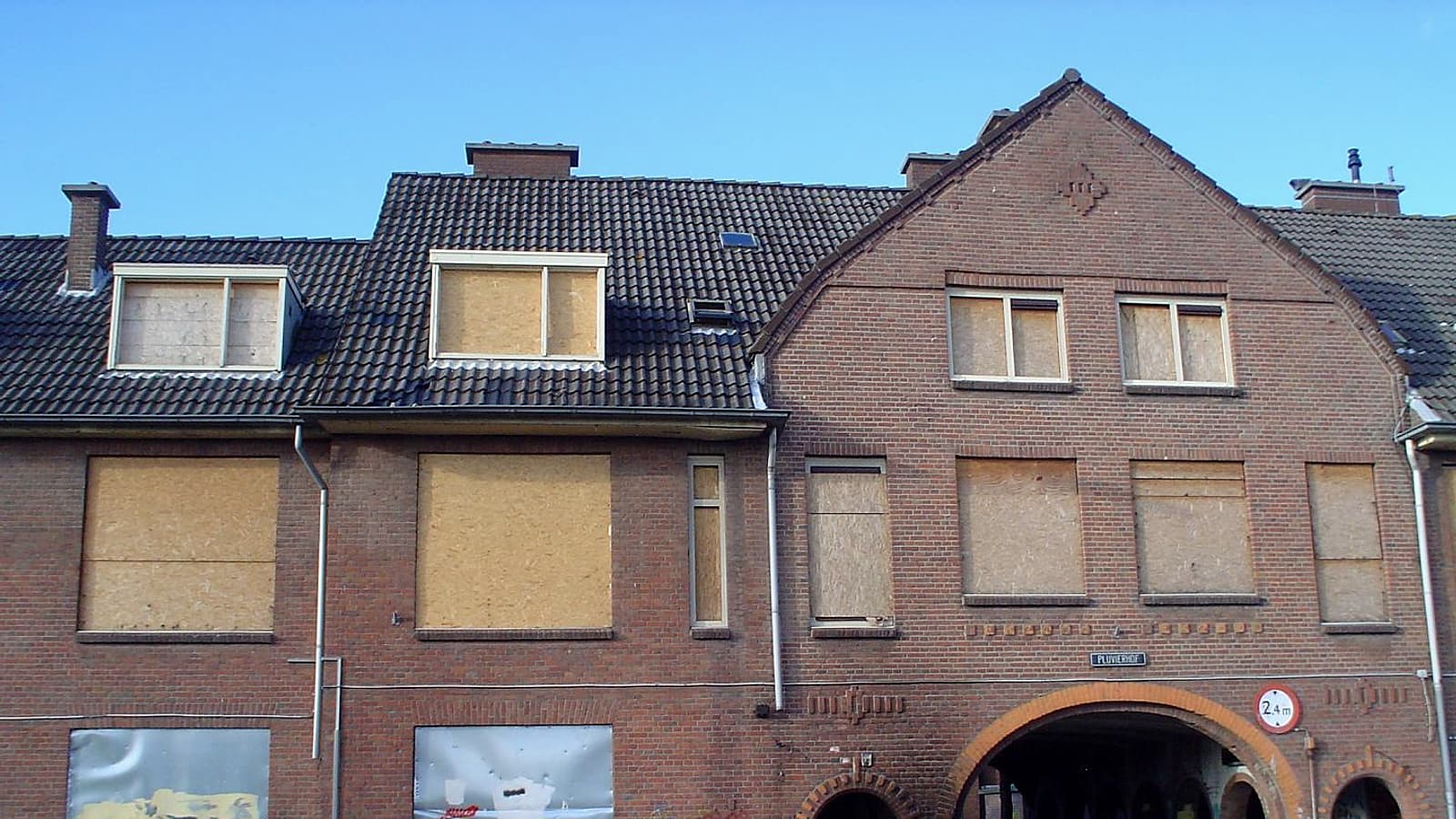
Most preservation controls regulate acts. Demolition by neglect is the problem of a building lost through omission: no permit application, no wrecking crew, just a missing section of roof and enough winters. Ordinances that address it convert the failure to act into an offense, which is legally awkward and practically necessary.
The affirmative duty ordinances create
The typical provision imposes minimum maintenance standards on designated properties. The owner must keep the building weathertight, structurally sound and secure against unauthorized entry. Ordinances usually enumerate the components: roof covering and flashing, gutters and downspouts, exterior walls and their finishes, foundations, chimneys, windows and doors, and any structural member.
Ordinances that work well state the standard in terms an inspector can apply on site. Water must be shed and directed away from the building. Openings must be closed against weather and entry. Structural members must not be deflecting, and elements at risk of falling must be secured. Vegetation must not be growing in the masonry. A standard written at that level of detail supports a violation notice; one written as a duty to prevent deterioration supports an argument.
The duty is narrower than restoration. It addresses deterioration that threatens the building, not the absence of features that were removed long ago and not appearance. Drawing that line carefully is what keeps the provision defensible, because a maintenance code that reads as a restoration mandate is the version most likely to be struck down or quietly not enforced.
How enforcement escalates
Enforcement begins with an inspection and a notice of violation identifying the deficient conditions and the repairs required. A compliance period follows. Where the owner does not comply, the ordinance supplies escalating tools: civil penalties that may accrue daily, a lien against the property for unpaid penalties, and an action for injunctive relief ordering specific repairs.
A quieter tool is the withheld approval. Some ordinances provide that no permit for new construction may issue on a site where a designated building was lost through neglect, for a stated period after the loss. Others condition zoning relief, subdivision approval or a change of use on compliance with the maintenance provision. These provisions target the reason most buildings are allowed to fail, which is that the land is worth more empty, and they are more effective than penalties against an owner who has already written the building off.
Two stronger tools appear in some jurisdictions. The municipality may perform the necessary work itself and recover the cost as a lien, which solves the problem of an owner who is unreachable or indifferent. A few jurisdictions authorize receivership, placing the building under a court-appointed receiver empowered to borrow against it, make repairs and, in some statutes, ultimately sell it. Receivership is slow and contested, and it is used against the worst cases rather than routinely.
Owners facing a demolition denial frequently argue that the building can no longer be saved economically. Where the condition arose from the owner's own withheld maintenance, ordinances and reviewing courts generally treat the hardship as self-created and refuse relief. The rule has an obvious purpose: otherwise the cheapest route through a preservation ordinance would be to wait. It also means the record of past enforcement matters, because a municipality that never issued a violation notice has a weaker answer to the hardship claim.
Where enforcement runs out
The practical limits are financial and constitutional. Penalties against an owner with no equity in a deteriorated building collect nothing, and a lien on a property worth less than the accumulated liens produces no repair. Regulation that leaves an owner with no economically viable use of the property raises a takings question, which is why every serious ordinance pairs the maintenance duty with a hardship procedure.
Timing is the other limitation, and it is the one preservation staff feel most. Deterioration is slow and then sudden. A roof that has been leaking for years produces no visible emergency until a structural member fails, at which point the cheap intervention is no longer available and the expensive one exceeds what the building is worth. Programs that inspect designated properties on a cycle catch problems while a tarpaulin and a gutter would still solve them; programs that respond to complaints usually arrive after that point.
Enforcement is also hostage to the building code. An owner who lets a structure fail far enough can obtain an unsafe structure determination, and that determination often carries authority to order demolition on public safety grounds regardless of the preservation designation. This is the loop that ordinances try to close by requiring notice to the commission and consideration of stabilization first, a coordination described in local designation and the commission's role.
| Tool | What it requires | Who initiates it | Practical limit |
|---|---|---|---|
| Notice of violation and repair order | Inspection and identified deficiencies | Code or preservation staff | Depends on the owner acting |
| Accruing civil penalties | Continued non-compliance after the cure period | Municipality | Uncollectible against a judgment-proof owner |
| Lien against the property | Unpaid penalties or municipal repair costs | Municipality | Worthless where the property has no equity |
| Injunction ordering repairs | Court action and proof of the violation | Municipal attorney | Slow, and enforcement requires contempt proceedings |
| Municipal repair with cost recovery | Express ordinance authority and appropriated funds | Municipality | Limited by the city's own budget |
| Receivership | Statutory authority and a court appointment | Municipality or, in some statutes, a nonprofit | Expensive and heavily litigated |
Neglect in federal review and private instruments
Neglect appears in federal review as well. Section 800.5 lists neglect of a property that causes its deterioration as an example of an adverse effect, with an exception for properties of religious and cultural significance to Indian tribes where deterioration is a recognized quality. Where a federal agency controls a property and allows it to decay, the deterioration is a matter for the process described in adverse effect findings and mitigation, and destroying a property to escape review carries its own statutory consequence discussed in what a listing does and does not restrict.
Private instruments supply the other enforcement route, and often the strongest one. An easement deed typically requires the owner to maintain the protected features and gives the holder inspection rights and enforcement remedies including restoration, a structure described in how preservation easements bind successive owners. Unlike a municipal maintenance provision, that duty was accepted by contract, so the usual objections to compelled maintenance do not arise.
Points to carry away
- The violation is the failure to maintain, not the eventual collapse or demolition.
- Typical duties cover the roof, drainage, exterior walls, foundations, and securing openings.
- Enforcement escalates from notice and repair order to fines, liens and injunctive relief.
- Some ordinances permit the municipality to repair and recover its costs against the property.
- Hardship the owner created by withholding maintenance is generally not a defense.
- Neglect that causes deterioration is an enumerated adverse effect in federal review.
Questions readers ask
Is an unsafe structure declaration a way around preservation review?
It can be, and that is the tension at the center of these disputes. Building officials have independent authority to order the demolition of a structure that endangers the public, and that authority is not usually conditioned on preservation approval. Owners have used the route deliberately, and municipalities have sometimes cooperated. Better ordinances require the building official to notify the preservation commission, to consider stabilization before demolition, and to document the condition, so that an emergency finding rests on engineering rather than on convenience.
Can a city force an owner to restore a building?
Ordinances distinguish maintenance from restoration and almost always stop at maintenance. The duty is to keep water out, keep the structure standing and keep the building secure, not to return missing features or to repair cosmetic deterioration. An order that demands restoration usually exceeds the ordinance and invites a successful challenge. Where restoration is genuinely required, the source is normally a separate instrument the owner accepted, such as an easement deed or a grant agreement, rather than the maintenance provision.
What can a neighbor or preservation group do?
It depends on the ordinance and on state standing rules. Many ordinances allow any person to file a complaint that triggers an inspection, and that is the most reliable route. Some jurisdictions permit a private action to enforce the maintenance provision; many do not, leaving enforcement entirely to the municipality. Where the building sits within a project that requires a federal permit or federal money, an interested organization can also seek to participate as a consulting party in the review of that undertaking.
Sources
- eCFR — 36 CFR 800.5, Assessment of Adverse EffectsNeglect resulting in deterioration is listed as an example of an adverse effect.
- Cornell Legal Information Institute — 54 U.S.C. 306113, Anticipatory DemolitionThe bar on federal assistance where a property is intentionally harmed to avoid review.
- Cornell Legal Information Institute — 54 U.S.C. 306114, Documentation of PropertyThe requirement to record a property that is substantially altered or demolished.
- eCFR — 36 CFR 68.3, Standards for the Treatment of Historic PropertiesThe preservation standard against which maintenance and stabilization work is judged.
- eCFR — 36 CFR 61.6, Local GovernmentsThe federal expectations for a certified local government's enforcement of its legislation.
- eCFR — 26 CFR 1.170A-14, Qualified Conservation ContributionsThe holder's obligation to enforce restrictions, which reaches deterioration as well as alteration.
Liberty Law Library is a publication, not a law firm. This article states general rules and cites its sources; it is not advice about any particular case, and the law differs by state and changes over time.
More in Historic Preservation

Listing on the National Register: Criteria and Process
Under 36 CFR 60.4 a district, site, building, structure or object qualifies for the National Register if it possesses integrity and meets one of four criteria: association with significant events, association with significant persons, distinctive design or construction, or the capacity to yield important information. Nominations travel through the State Historic Preservation Officer and a state review board to the Keeper, and 36 CFR 60.6 gives a private owner an objection that blocks listing.
Federal Undertakings and What Triggers Review
Under 36 CFR 800.16(y) an undertaking is a project, activity or program funded in whole or in part under the direct or indirect jurisdiction of a federal agency, carried out by or on behalf of an agency, carried out with federal financial assistance, or requiring a federal permit, license or approval. Section 800.3 requires the agency to decide first whether an undertaking exists and then whether it is the type of activity with potential to cause effects on historic properties.

The Consultation Sequence and Its Agreement Documents
Subpart B of 36 CFR Part 800 sets out four steps: initiation under 800.3, identification of historic properties under 800.4, assessment of adverse effects under 800.5, and resolution under 800.6. The preservation officer, Indian tribes, local governments, the applicant and interested members of the public are consulting parties. Resolution normally ends in a memorandum of agreement, or in a programmatic agreement for complex or repeated undertakings.