Determining Eligibility and the Area of Potential Effects
A property never nominated can carry the same weight in federal review as one listed for decades. The two questions that decide a project's exposure are which properties count and how far out the study boundary is drawn.
The rule in short
Under 36 CFR 800.16(l) a historic property is one included in or eligible for inclusion in the National Register, so eligibility alone brings a property inside the review. Eligibility is usually settled by consensus between the agency and the preservation officer, and referred to the Keeper under 36 CFR Part 63 where they disagree. The area of potential effects covers the geography in which the undertaking may directly or indirectly alter historic properties.
Two determinations set the size of a project's preservation problem before anyone argues about effects. The first is which properties count as historic properties. The second is how far out the study boundary extends. Both are made early, both are made by the agency, and both are difficult to revisit once construction financing is committed.
Eligible counts the same as listed
Section 800.16(l) defines a historic property as any prehistoric or historic district, site, building, structure or object included in, or eligible for inclusion in, the National Register. The word eligible carries equal weight with included. A farmstead that no one has ever nominated, if it meets the criteria, is protected in the review exactly as a property listed for decades would be.
The definition also reaches further than buildings and sites. Properties of traditional religious and cultural importance to an Indian tribe or Native Hawaiian organization can meet the criteria and be treated as historic properties, even where nothing built stands on them. Identifying those places depends almost entirely on consultation, because the information that establishes significance is held by the community rather than in a public file. A survey conducted only by walking the ground and reading county records will not find them.
This is the answer to owners who assume that avoiding a nomination avoids federal attention, and to developers who check the Register database and conclude a site is clear. The database records listings. It does not record everything that would qualify, and it cannot record the properties nobody has yet evaluated.
How eligibility is decided in practice
Most eligibility questions never leave the state. The agency official applies the National Register criteria in consultation with the preservation officer and any Indian tribe or Native Hawaiian organization that attaches religious and cultural significance to the property. If the agency and the preservation officer agree, that consensus determination governs for the purpose of the undertaking.
A determination made for one undertaking does not settle the question forever, though as a practical matter it is treated as settled. Agencies and preservation officers rely on earlier determinations when the same property comes up again, and reopening one requires a reason: new information, a different boundary, or a claim of significance that was never evaluated. Sponsors should therefore assume that a prior finding of eligibility on a neighboring project will govern theirs unless they can show why it should not.
Disagreement changes the route. Where the agency and the preservation officer do not agree, or where the Advisory Council or the Secretary of the Interior so requests, the agency obtains a determination of eligibility from the Secretary under 36 CFR Part 63. That determination is made on documentation resembling a nomination, and it binds the federal review. It does not list the property, which is why the register and the set of properties treated as historic never fully coincide, a gap that also arises from owner objections described in the nomination process and the objection that blocks listing.
The regulation does not require an exhaustive survey. It requires a reasonable and good faith effort, and what is reasonable scales with the magnitude of the undertaking, past land disturbance, and the likely nature and location of properties. The mistake is treating this as permission to do the minimum. An effort is judged after the fact, usually by someone pointing at what was missed, so the record needs to show why the chosen methods were adequate before anyone knew the answer.
Drawing the area of potential effects
Section 800.16(d) defines the area of potential effects as the geographic area or areas within which an undertaking may directly or indirectly cause alterations in the character or use of historic properties, if any exist. Two features of the definition control everything that follows. The area is influenced by the scale and nature of the undertaking, and it may be different for different kinds of effects.
The area is not the same as the project site and it is not the same as a parcel boundary. It is defined by where effects may reach, which can be considerably larger than the land the sponsor controls and occasionally smaller than the parcel where only a corner is disturbed. Because the boundary determines what gets surveyed, it determines what gets found, and consulting parties scrutinize it for exactly that reason.
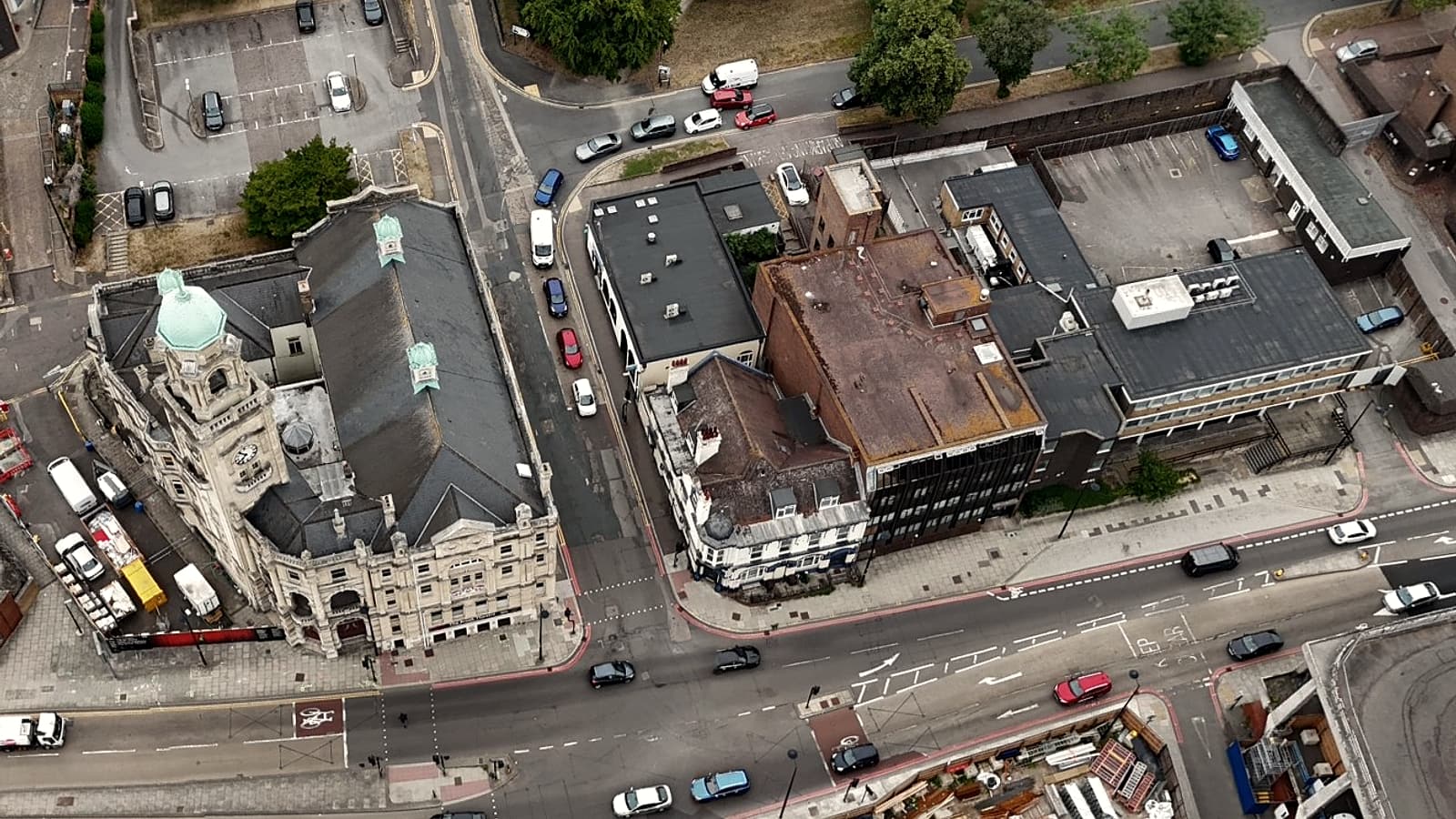
In practice agencies draw more than one boundary. A tight boundary covers ground disturbance: the footprint, staging areas, access roads, borrow and spoil sites, and utility connections. A wider boundary covers indirect effects such as changes to a viewshed, vibration, noise, traffic and induced development. A tall structure can have a direct effects area of an acre and a visual effects area measured in miles.
| Property status | How it is established | Treated as a historic property? | Where the record sits |
|---|---|---|---|
| Listed on the National Register | Nomination accepted by the Keeper | Yes | Public register entry |
| Determined eligible by consensus | Agency and preservation officer agree | Yes, for that undertaking | The project consultation file |
| Determined eligible by the Keeper | Request under 36 CFR Part 63 | Yes | Formal determination of eligibility |
| Nomination blocked by owner objection | Keeper determines eligibility instead of listing | Yes | Determination on the blocked nomination |
| Not yet evaluated | No determination has been made | Unknown, must be evaluated | Nothing until identification occurs |
| Determined not eligible | Agency and preservation officer agree it fails the criteria | No | The project consultation file |
Phasing identification on corridors and large sites
Linear projects and large land areas cannot always be surveyed before an alignment is chosen. The regulation permits a phased process where alternatives are under consideration or where access to the whole area is not available. Identification and evaluation proceed as the design narrows, and the schedule for completing them is written into a programmatic agreement, an approach described in the consultation sequence and its agreement documents.
Phasing is a timing concession, not a substantive one. The work still has to be done, and doing it late means doing it with fewer options. Where phased survey later finds a significant site under a chosen alignment, the sponsor faces a redesign or the harder conversation described in adverse effect findings and the mitigation that follows. Where the site is archaeological and lies on federal or tribal land, a second statute applies independently, with its own permit requirement and its own penalties, set out in the rules governing archaeological resources on public land.
Points to carry away
- An eligible but unlisted property receives the same treatment in review as a listed one.
- Most eligibility questions are resolved by consensus between the agency and the preservation officer.
- Disagreement sends the question to the Keeper of the National Register under 36 CFR Part 63.
- The area of potential effects is scaled to the undertaking and may differ for different effect types.
- Indirect effects extend the study area beyond the construction footprint.
- Identification must be a reasonable and good faith effort, not an exhaustive one.
Questions readers ask
Can an applicant expand or shrink the study area?
An applicant can propose a boundary and support it with analysis, but the agency official sets it. The regulation ties the area to the scale and nature of the undertaking, so the honest way to shrink it is to shrink the project: fewer staging areas, a shorter access road, a lower structure, less permanent lighting. Attempting to draw a narrow boundary around an unchanged project produces a record that consulting parties can attack, and reopening identification after a challenge costs more than the wider survey would have.
What if a property is discovered after construction begins?
The regulations anticipate this. Where a previously unidentified property is found after the agency has completed review, the response depends on what the agency committed to in advance. Agreements commonly include a post-review discovery stipulation setting out who is notified, how work stops in the vicinity, and what period the consulting parties have to comment on a treatment plan. Where no such provision exists, the agency must make reasonable efforts to avoid or mitigate the effects and consult on the discovery. Building the stipulation in advance is far cheaper than negotiating it with equipment idle.
Is information about a site's location public?
Not necessarily. Agencies may withhold from public disclosure information about the location, character or ownership of a historic property where disclosure may cause a significant invasion of privacy, risk harm to the property, or impede the use of a traditional religious site by practitioners. This matters most for archaeological sites and for places of religious and cultural importance to Indian tribes. The consequence for a project record is that some documentation is prepared in a restricted version, and consulting parties may see material that the general public file does not contain.
Sources
- eCFR — 36 CFR 800.4, Identification of Historic PropertiesThe identification effort, consensus determinations of eligibility and phased identification.
- eCFR — 36 CFR 800.16, DefinitionsThe definitions of historic property and area of potential effects.
- eCFR — 36 CFR Part 63, Determinations of Eligibility for Inclusion in the National RegisterThe procedure for obtaining a determination of eligibility from the Secretary.
- eCFR — 36 CFR 63.2, Procedures for Requesting Determinations of EligibilityHow a request is made and what documentation supports it.
- eCFR — 36 CFR 60.4, Criteria for EvaluationThe substantive criteria applied in an eligibility determination.
- eCFR — 36 CFR 800.11, Documentation StandardsWhat each finding must contain and the confidentiality of sensitive location information.
Liberty Law Library is a publication, not a law firm. This article states general rules and cites its sources; it is not advice about any particular case, and the law differs by state and changes over time.
More in Historic Preservation

Listing on the National Register: Criteria and Process
Under 36 CFR 60.4 a district, site, building, structure or object qualifies for the National Register if it possesses integrity and meets one of four criteria: association with significant events, association with significant persons, distinctive design or construction, or the capacity to yield important information. Nominations travel through the State Historic Preservation Officer and a state review board to the Keeper, and 36 CFR 60.6 gives a private owner an objection that blocks listing.
Federal Undertakings and What Triggers Review
Under 36 CFR 800.16(y) an undertaking is a project, activity or program funded in whole or in part under the direct or indirect jurisdiction of a federal agency, carried out by or on behalf of an agency, carried out with federal financial assistance, or requiring a federal permit, license or approval. Section 800.3 requires the agency to decide first whether an undertaking exists and then whether it is the type of activity with potential to cause effects on historic properties.

The Consultation Sequence and Its Agreement Documents
Subpart B of 36 CFR Part 800 sets out four steps: initiation under 800.3, identification of historic properties under 800.4, assessment of adverse effects under 800.5, and resolution under 800.6. The preservation officer, Indian tribes, local governments, the applicant and interested members of the public are consulting parties. Resolution normally ends in a memorandum of agreement, or in a programmatic agreement for complex or repeated undertakings.