On-Premise and Off-Premise Licenses Compared
Retail licensing is state law, and it varies more than any other part of this subject. Underneath the variation, almost every state draws the same first line, and the conditions that follow from it are broadly recognizable everywhere.
The rule in short
State retail licenses divide into on-premise licenses, which authorize sale for consumption where the beverage is served, and off-premise licenses, which authorize sale in sealed containers for consumption elsewhere. On-premise conditions typically concern food service, hours, server training and entertainment. Off-premise conditions concern package integrity, product categories and outlet type. Federal law leaves retail licensing to the states, and 27 U.S.C. 122 supports that control.
Retail alcohol licensing is state law. There is no federal license to sell drinks to the public, and the federal permit categories stop at the wholesale tier. What follows describes the pattern common across states rather than the rule in any one of them, and every specific figure, category name and condition differs somewhere.
The line every state draws
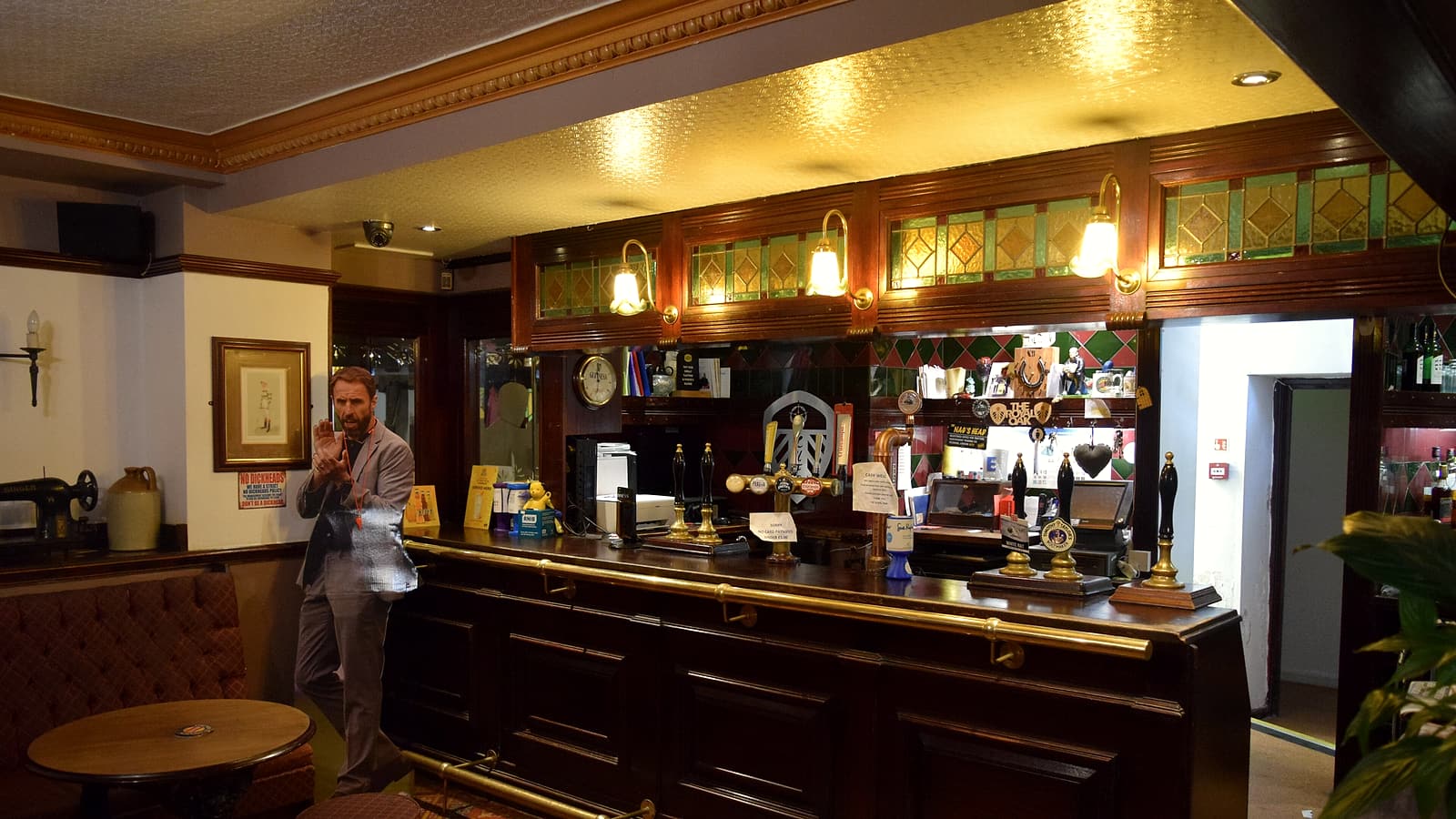
An on-premise license authorizes sale of beverage alcohol for consumption at the licensed place. Bars, restaurants, hotels, clubs and stadium concessions hold this kind of license. An off-premise license authorizes sale in sealed containers to be carried away and consumed somewhere else. Liquor stores, grocery stores and convenience stores hold this kind.
The distinction matters because the risks differ. On-premise service involves serving a person who is present and may already be impaired, which is why intoxication, hours and server conduct dominate the conditions. Off-premise sale involves handing over a sealed package, which is why age verification, package integrity and category limits dominate instead.
Most states subdivide further by product. Separate license classes are common for beer only, for beer and wine, and for all beverage alcohol including distilled spirits. The subdivision produces the familiar pattern in which a small restaurant holds a beer and wine license while a full bar down the street holds a broader one.
What an on-premise license typically requires
Food service requirements are the most common condition. Many states require that a licensee derive a stated share of revenue from food, or maintain a kitchen and serve meals during the hours alcohol is served. The ratio is checked on records the licensee must keep, and failing it is a frequent basis for non-renewal.
Hours of sale are fixed by statute or by local ordinance, often with different limits on different days. Other recurring conditions concern the minimum age of servers and bartenders, mandatory server training, the physical configuration of the premises, restrictions on entertainment and dancing, and rules about who may be present after service ends.
Almost every on-premise state also prohibits service to a visibly intoxicated person, which is where licensing intersects with civil liability. That intersection is treated in the operating conditions, sales to minors and third-party liability that follow from retail service.
A retail license is issued to a named person or entity for a specific address, and both halves are conditions. Moving to a new location generally requires a new application or a transfer approval, not a change of address filing. So does a change in ownership or in the individuals behind the licensee. Buyers of restaurants regularly discover that the license they thought they were purchasing cannot move with the business or cannot be transferred without a fresh review of the new owner's qualifications.
What an off-premise license typically requires
The defining condition is that nothing may be opened or consumed on the premises. States then vary sharply in what may be sold and by whom. Some allow full-strength beer, wine and spirits in grocery stores; some limit grocery sale to beer below a stated alcohol content; some confine spirits to state-operated or specially licensed outlets entirely.
Other common conditions concern container sizes, single-container sales, refrigerated display, keg registration, and the placement of product relative to other merchandise. Delivery and curbside pickup have become separately regulated activities in many states, with their own conditions on age verification at the point of handover.
| Feature | On-premise license | Off-premise license |
|---|---|---|
| Core privilege | Sale for consumption at the licensed place | Sale in sealed containers to be taken away |
| Typical holders | Bars, restaurants, hotels, clubs | Package stores, groceries, convenience stores |
| Central operating condition | Food service, hours, no service to intoxicated persons | Package integrity and no consumption on site |
| Product limits | Usually by license class held | Often by outlet type as well as class |
| Staff requirements | Server age minimums and training | Age verification at the register |
| Principal civil exposure | Dram shop liability for later harm | Liability for furnishing to a minor |
Quotas, waiting lists and the value of a license
Many states cap the number of retail licenses of a given class, commonly by a population formula applied to a county or municipality. Where the cap has been reached, no new license issues until population grows or a license is surrendered. That scarcity converts the license into an asset with a market price, sometimes far exceeding any fee the state charges.
Transfers are supervised. A purchaser must ordinarily qualify in its own right, the transfer must be approved, and the regulator may impose conditions or refuse. Some states restrict transfers across municipal lines, which keeps the local supply fixed. Escrow arrangements pending approval are common, and a sale that closes before approval is a recurring source of disputes.
Combination, temporary and producer-held licenses
Between the two basic categories sit a range of specialized authorizations: caterer permits allowing service at off-site events, temporary or special event licenses for festivals, club licenses limited to members, and licenses for common carriers serving passengers in transit. Each carries its own conditions and most are time-limited.
Producer-held retail privileges are the most significant departure. Tasting rooms, brewpubs and winery outlets let a producer sell directly to consumers, and they are express exceptions to the separation of producer, wholesaler and retailer functions. Federal law continues to apply to the supplier side of any such arrangement through the prohibitions on inducements between tiers, and the license itself remains subject to the state citation, hearing and penalty process. Where the retailer is also a federal permittee, the requirements in the federal basic permit rules apply to that activity separately.
Points to carry away
- Retail licensing is a matter of state law and no federal basic permit covers it.
- An on-premise license authorizes consumption at the place of sale.
- An off-premise license authorizes sale in sealed containers for consumption elsewhere.
- Many states restrict the product categories an off-premise outlet may sell.
- Numerical quotas tied to population limit how many licenses exist in a jurisdiction.
- Combination licenses and special permits sit between the two basic categories.
Questions readers ask
Can one business hold both kinds of license?
In many states, yes, and the arrangement is common in restaurants that sell bottles to take home and in taprooms attached to production facilities. States handle it in different ways: some issue a combination license, some allow both licenses at one address with a physical separation requirement, and some prohibit the pairing entirely. Where both are held, the conditions of each apply to the corresponding activity, so a container sold to be taken away must meet the sealed package rules even though the premises also serves drinks.
Why do some states limit how many licenses exist?
Quota systems tie the number of available licenses to population or to a fixed count set by the jurisdiction. The stated purposes are moderating outlet density and giving the regulator a manageable population to supervise. The practical consequence is a secondary market: where no new licenses are issued, an existing license acquires substantial value and is bought and sold, subject to the regulator's approval of the transfer. Quota structures also produce long waiting lists and periodic legislative pressure to expand them.
Do producers ever hold retail licenses?
Yes, through exceptions that most states have created for tasting rooms, brewpubs and winery outlets. These are deliberate departures from the separation of tiers, justified on the ground that a small volume sold at the place of production does not create the influence the separation was designed to prevent. The exceptions are usually capped by volume, limited to product the licensee made, and conditioned on the producer not acquiring interests in unrelated retail outlets.
Sources
- Cornell Legal Information Institute — 27 U.S.C. 122, Shipments Into States for DeliveryThe federal support for state control over alcohol arriving in a state.
- Cornell Legal Information Institute — 27 U.S.C. 121, State Laws Affecting TransportationThe subjection of imported liquor to the laws of the state on arrival.
- eCFR — 27 CFR 6.11, Meaning of TermsThe federal definition of a retailer and a retail establishment for trade practice purposes.
- eCFR — 27 CFR Part 6, Tied-HouseThe federal restrictions that apply to dealings between suppliers and retailers.
- Cornell Legal Information Institute — 27 U.S.C. 203, Unlawful Businesses Without PermitThe federal permit categories, which do not include retail sale to consumers.
- Alcohol and Tobacco Tax and Trade Bureau — Beverage AlcoholThe federal agency's description of the commodities and the businesses it regulates.
Liberty Law Library is a publication, not a law firm. This article states general rules and cites its sources; it is not advice about any particular case, and the law differs by state and changes over time.
More in Alcohol Beverage Law

Direct Shipping to Consumers Across State Lines
Direct shipment to consumers is permitted by the receiving state, not by federal law, and typically requires a direct shipper permit issued by that state. Common conditions include volume caps per household, adult signature on delivery, marking of the shipping container, remittance of the state's excise and sales taxes, periodic reporting, and use of an approved carrier. Under Granholm a state may not allow in-state producers to ship while forbidding out-of-state producers from doing the same.
Tied-House Prohibitions and the Exceptions
Section 205(b) of Title 27 makes it unlawful for an industry member to induce a retailer to purchase its products to the exclusion, in whole or in part, of competing products, by acquiring an interest in the retailer, by furnishing things of value, by paying for advertising or display service, by guaranteeing a loan, by extending credit beyond the prescribed period, or by requiring the retailer to take a quota. Part 6 of 27 CFR implements the prohibition and lists the exceptions.
Who Must Hold a Federal Alcohol Permit
Under 27 U.S.C. 203 and 27 CFR Part 1, no person may engage in the business of importing beverage alcohol, producing or rectifying distilled spirits or wine, or purchasing beverage alcohol for resale at wholesale, except pursuant to a basic permit. Section 1.24 sets the qualifications: no disqualifying conviction, enough business experience, financial standing or trade connections to begin and maintain operations, and proposed operations that do not violate state law.