A standalone investor files one petition establishing the enterprise, the investment, the lawful source of capital and fees, and a business plan supporting direct job creation. A regional center investor files a different petition, which may incorporate records already filed in the project application, and relies on that approved application for the project and job creation case. Both carry a signed disclosure of fees paid to agents, finders and broker-dealers.
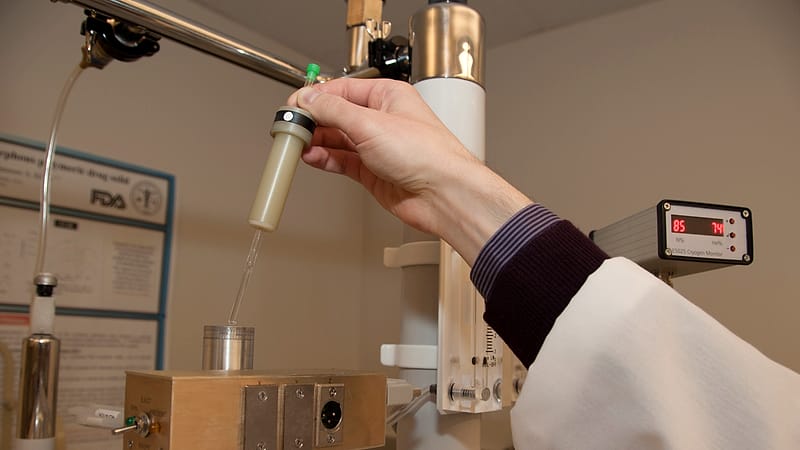
Section 355 of Title 21 bars introducing a new drug into interstate commerce without an effective approval. The application must contain full reports of investigations showing safety and effectiveness, the composition and manufacturing methods, samples and proposed labeling. Approval requires substantial evidence from adequate and well-controlled investigations. Under 21 CFR Part 314 a review cycle ends in an approval letter or a complete response letter.
Federal Rule of Appellate Procedure 3 requires an appeal as of right to be taken by filing a notice of appeal with the district clerk, specifying the party appealing, designating the judgment or order appealed from, and naming the court to which the appeal is taken. Rule 4 fixes the time: thirty days after entry in an ordinary civil case, sixty days where the United States or a federal officer or agency is a party, and fourteen days for a criminal defendant.
Article 12 requires a court to order the return of a child forthwith where proceedings are commenced within one year of the wrongful removal or retention. Where more than a year has passed, return is still required unless the respondent proves by a preponderance that the child is now settled in the new environment. The Supreme Court held in Lozano that the period is not subject to equitable tolling, so concealment does not stop the clock, though it bears on settlement.
Federal Rule of Evidence 1002 requires an original writing, recording or photograph to prove its content, unless the rules or a federal statute provide otherwise. Rule 1001 defines original broadly enough to include any printout of electronically stored information that accurately reflects the data. Rule 1003 admits duplicates on the same footing absent a genuine question of authenticity, and Rule 1004 permits other evidence of content when the original is lost, destroyed or beyond reach.
Section 3730(e)(4) requires dismissal, unless the government opposes it, where substantially the same allegations or transactions were publicly disclosed through one of three channels: a federal hearing in which the government is a party, a federal report or audit, or the news media. A relator survives as an original source either by voluntarily disclosing the information to the government before that public disclosure, or by holding independent knowledge that materially adds to it.
Federal Rule of Appellate Procedure 10(a) defines the record on appeal as the original papers and exhibits filed in the district court, the transcript of proceedings, and a certified copy of the docket entries. Rule 10(b) requires the appellant to order a transcript or certify that none will be ordered, and to serve a statement of issues where only part is ordered. Rules 10(c) and 10(d) supply a prepared statement or an agreed statement where no transcript is available.
Section 3730(d)(1) gives a relator in an intervened case at least fifteen and not more than twenty-five percent of the proceeds, depending on the contribution to the prosecution. Section 3730(d)(2) gives a relator in a declined case not less than twenty-five and not more than thirty percent. Where the action rested primarily on public information the relator did not supply, the court may award no more than ten percent.
Under Article 3 of the Abduction Convention and 22 U.S.C. 9003, a petitioner seeking return must show by a preponderance of the evidence that the child was habitually resident in the requesting country, that the petitioner held rights of custody under that country's law, that those rights were actually being exercised, and that the removal or retention breached them. The court decides location, not custody.
Section 3730(b)(3) allows the government to move for extensions of the sixty-day seal for good cause, and those motions are made in camera. The seal binds the relator as well as the government: the existence of the action, its contents and the identity of the defendant are not to be disclosed. Breaking the seal does not automatically end the case, and courts weigh the harm to the government, the severity of the violation and evidence of bad faith.
Of the visas made available each fiscal year under the fifth employment-based preference, twenty percent are reserved for immigrants who invest in a rural area, ten percent for those who invest in an area the Secretary of Homeland Security has designated as one of high unemployment, and two percent for infrastructure projects. The remainder is unreserved. Unused reserved numbers stay in their own category for one further fiscal year and then fall into the unreserved pool.
In the three-tier structure a producer or importer sells to a licensed wholesaler, the wholesaler sells to a licensed retailer, and only the retailer sells to a consumer. Separation is enforced through licensing, through ownership restrictions, and through the federal trade practice provisions of 27 U.S.C. 205 implemented in 27 CFR Parts 6 and 8. Granholm requires states to treat in-state and out-of-state producers alike.