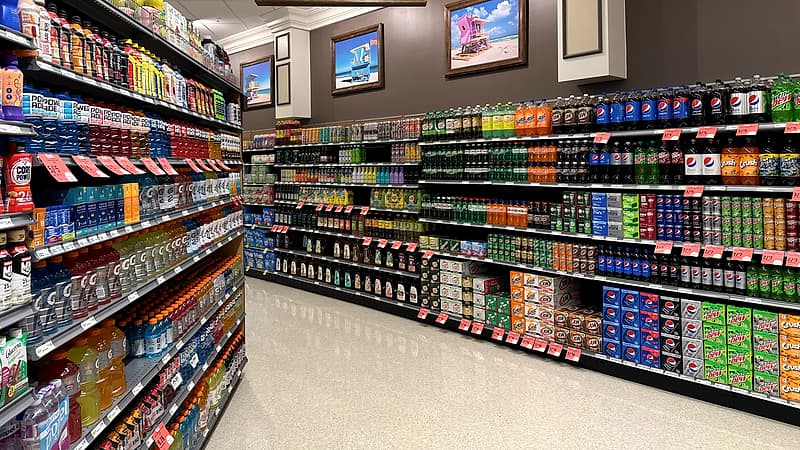
Section 205(b) of Title 27 makes it unlawful for an industry member to induce a retailer to purchase its products to the exclusion, in whole or in part, of competing products, by acquiring an interest in the retailer, by furnishing things of value, by paying for advertising or display service, by guaranteeing a loan, by extending credit beyond the prescribed period, or by requiring the retailer to take a quota. Part 6 of 27 CFR implements the prohibition and lists the exceptions.
Section 205 of Title 27 prohibits four trade practices: exclusive outlet arrangements, tied-house inducements, commercial bribery, and consignment sales. The first three are unlawful only where the conduct induces a trade buyer to purchase to the exclusion, in whole or in part, of competing products. Consignment sales are prohibited outright, subject to stated exceptions. The practices are implemented in 27 CFR Parts 8, 6, 10 and 11 respectively, each with its own definitions and exceptions.
Treaty trader and treaty investor status is available only to nationals of a country covered by a qualifying treaty of commerce and navigation, an equivalent agreement, or a statutory designation. The individual must hold that nationality and the enterprise must be at least fifty percent owned by nationals of the same country. Residence does not substitute for nationality, and the effect of a treaty ending is governed by practice rather than by any express rule.
The Economic Sanctions Enforcement Guidelines treat a voluntary self-disclosure as a significant mitigating factor and substantially reduce the base penalty amount where one is made. A disclosure is not voluntary if the government or a third party has already reported the conduct or an inquiry is under way. The export regulations at 15 CFR 764.5 and the arms regulations at 22 CFR 127.12 have their own disclosure procedures, each requiring prompt initial notification followed by a full account.
A targeted employment area is a rural area or an area the Secretary of Homeland Security has designated as one of high unemployment. Rural means outside every metropolitan statistical area and outside any city or town of twenty thousand or more. High unemployment means a census tract, or contiguous tracts where the enterprise is principally doing business, whose weighted average unemployment rate is at least 150 percent of the national rate. No state or local official may designate one.
National Register listing is honorific and procedural. It does not require an owner to maintain, restore, open or preserve a property, and it does not prevent alteration or demolition carried out with private funds and without federal involvement. What listing does is bring a property within 54 U.S.C. 306108, which requires a federal agency to take the effects of its undertakings into account, and it establishes eligibility for the federal rehabilitation credit and certain grants.
Section 3729(a)(1) imposes liability on a person who knowingly presents a false or fraudulent claim for payment, or uses a false record material to such a claim. Falsity may be factual, where goods or services were not provided as billed, or legal, where the claimant did not comply with a requirement. The Supreme Court held in Escobar that implied certification can support liability where a claim makes specific representations and an omission renders them misleading.
A regional center's designation may be terminated for conduct inconsistent with its designation, untrue statements in required filings, breaches of the bona fides or securities provisions, or grounds relating to fraud, public safety or national security. Termination is mandatory where a center fails to pay the annual Integrity Fund fee within ninety days, refuses or impedes an audit, or breaches the redeployment conditions. Lesser sanctions include fines, suspension and permanent bars.
Defense articles and defense services described on the United States Munitions List at 22 CFR 121.1 are controlled under the International Traffic in Arms Regulations, administered under authority of 22 U.S.C. 2778. Items not described there may be subject to the Export Administration Regulations at 15 CFR 730 to 774. The order of review in 22 CFR 120.11 directs a reader to the munitions list first, and a commodity jurisdiction request resolves genuine doubt.
Under 27 U.S.C. 203 and 27 CFR Part 1, no person may engage in the business of importing beverage alcohol, producing or rectifying distilled spirits or wine, or purchasing beverage alcohol for resale at wholesale, except pursuant to a basic permit. Section 1.24 sets the qualifications: no disqualifying conviction, enough business experience, financial standing or trade connections to begin and maintain operations, and proposed operations that do not violate state law.