Under 21 U.S.C. 355(j) an abbreviated application relies on the agency's prior finding for a listed drug, showing the same active ingredient, route, dosage form, strength and conditions of use, essentially the same labeling, and bioequivalence under 21 CFR Part 320. The applicant must certify to each listed patent under one of four paragraphs, and the fourth can trigger suit and a stay of approval.
Section 800.5 of 36 CFR finds an adverse effect where an undertaking may alter, directly or indirectly, any characteristic qualifying a property for the National Register in a manner that diminishes the integrity of location, design, setting, materials, workmanship, feeling or association. The listed examples include destruction, treatment inconsistent with the Secretary's Standards, relocation, visual and audible intrusions, neglect, and transfer out of federal control.
Postmarket drug reporting under 21 CFR 314.80 requires expedited reports of adverse experiences that are both serious and unexpected. Device reporting under 21 U.S.C. 360i and 21 CFR Part 803 requires manufacturers to report information reasonably suggesting a device may have caused or contributed to a death or serious injury, or has malfunctioned in a way likely to cause such an outcome if it recurred.
Where no exemption or general authorization covers conduct that a sanctions program prohibits, the route is an application for a specific license under 31 CFR 501.801 and 501.802. The application must identify the parties, describe the transaction in full and attach supporting documentation, and the office may require further information before deciding. A license authorizes only the described activity, on the conditions stated, and does not excuse conduct that has already occurred.
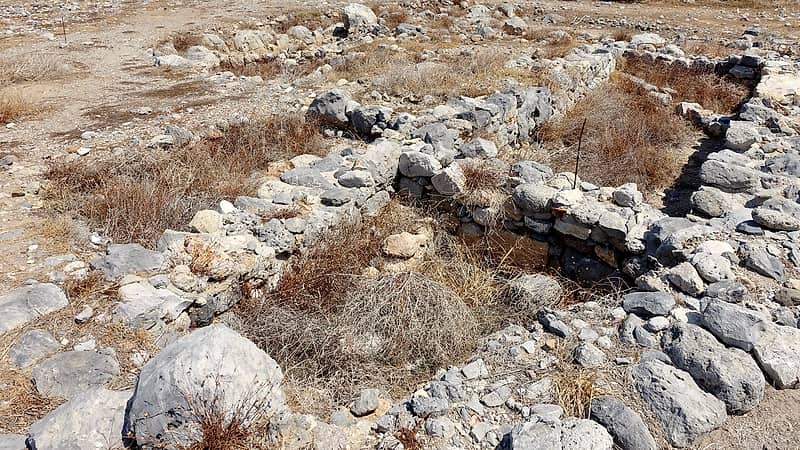
The Archaeological Resources Protection Act, at 16 U.S.C. 470aa and following, prohibits excavating, removing, damaging, altering or defacing any archaeological resource on public or Indian lands without a permit from the federal land manager. Permits under 16 U.S.C. 470cc require a qualified applicant, a research purpose in the public interest, curation of resources and records, and tribal consent on Indian lands.
Federal Rule of Evidence 901(a) requires the proponent of an item to produce evidence sufficient to support a finding that the item is what the proponent claims. Rule 901(b) lists non-exclusive illustrations, among them a witness with knowledge, distinctive characteristics, voice identification, and proof about a process or system. Rule 902 then makes whole categories self-authenticating, including sealed public documents, certified public records, and certified business and machine records.
Under the International Emergency Economic Powers Act at 50 U.S.C. 1701 to 1707 and the regulations in 31 CFR Chapter V, property and interests in property of a designated person that come within the United States or within the possession or control of a United States person are blocked. Blocked property may not be transferred, paid, exported, withdrawn or otherwise dealt in. Holders must report blocked property and rejected transactions within the periods the regulations fix.
Bridge financing is interim capital, usually a short-term loan or sponsor equity, used to begin a project before investor subscriptions are complete and later repaid from those subscriptions. Agency policy permits jobs created by bridge-financed activity to be credited to the immigrant investors whose capital replaces the bridge, provided the financing was temporary in nature and contemplated as such. Permanent financing refinanced after the fact stands on much weaker ground.
Federal Rule of Appellate Procedure 28(a) lists what an appellant's brief must contain, including a corporate disclosure statement, tables, a jurisdictional statement, a statement of the issues, a statement of the case with record references, a summary of the argument, the argument itself with the standard of review for each issue, a conclusion, and the required certificates. Rule 32 governs form, typeface and the word limits, and requires a certificate of compliance.
A person already in the United States in another nonimmigrant status may apply to change into a treaty classification without leaving, using a petition filed by the enterprise. Approval grants status but confers no visa, so any departure requires a consular application in which the officer makes an independent determination. Applying abroad in the first instance produces both the visa and the admission, at the cost of leaving and of a decision that is largely unreviewable.
Federal Rule of Evidence 404(a) prohibits evidence of a person's character or character trait offered to prove that the person acted in accordance with it on a particular occasion. Rule 404(b) permits evidence of other crimes, wrongs or acts when offered for a purpose other than propensity, such as motive, intent, knowledge, identity or absence of mistake. Rule 405 controls the permitted methods of proof, and Rule 406 treats habit and routine practice as outside the prohibition entirely.
The first question is whether an item is subject to the Export Administration Regulations at all, which 15 CFR 734.3 answers by reference to location, origin, United States content and the direct product rules. If it is, the item either matches an entry on the Commerce Control List, giving it a control number, or it does not and is designated EAR99. The control number, read against the country chart, determines whether authorization is required.